
Sorry We’re Closed (á la mode games) is a survival horror game with immense amounts of style. The art (which is one of the first things that attracted me to it) is stunning, both the nostalgic computer graphics and the character portraits. The music hits the perfect vibes and the gameplay adds to the survival horror experience.
Michelle is a young woman working in a corner shot in a small neighborhood in London. Though on another continent, the community feels very much like some of the counter-culture neighborhoods I’ve seen in San Francisco, being full of charming punks, oddballs, and weirdos. Everyone seems a bit on edge, considering the number of disappearances in the area.
Michelle is struggling after breakup with her ex girlfriend, who is now a TV star with episodes of her constantly playing and reminding her of what she lost. One night, a terrifying nightmare enters her bedroom and places a curse on her. It marks her as the property of a demon, known as the Duchess, who demands that Michelle love her and/or end up as one of her many victims being tortured for all eternity.
In order to combat the curse, Michelle has to enter nightmare realms full of demons bent on tearing her apart. These segments of survival horror contrast with the other areas of the game, in which Michelle wanders around her neighborhood and chats with her friend and neighbors. In the nightmare areas, she faces these demons with a combination of weapons and a limited ammo.
The actual combat mechanic is both fascinating and sometimes frustrating. It involves exploring the areas with a third-person fixed-camera perspective, and then switching to first person perspective in order to use weapons and attack. At times, this switch can be disorienting, causing me to be wildly off with my shooting or escape. But I eventually got used to it (for the most part).
Another element is the Third Eye ability, which shifts perspective between the real world and hell worlds in which she finds herself. The technique helps to solve puzzles and get past impossible obstacles. It also stuns enemies, making it easier to combat them.
Everything kind of circles around themes of lust, love, and obsession, with certain aspects that feel inspired by Hellraiser. All of the community members seem be caught up in their own relationships and desire for love, while the Duchess herself is desperate to get back the love she lost when she fell from heaven. Even the combat reflects this, with the demons having hearts that can be broken to take them down more quickly.
Sorry We’re Closed was such a cool experience, and I’m planning on playing it again (despite the wonky, for me, combat). I have many more thoughts, which I will write up soon.
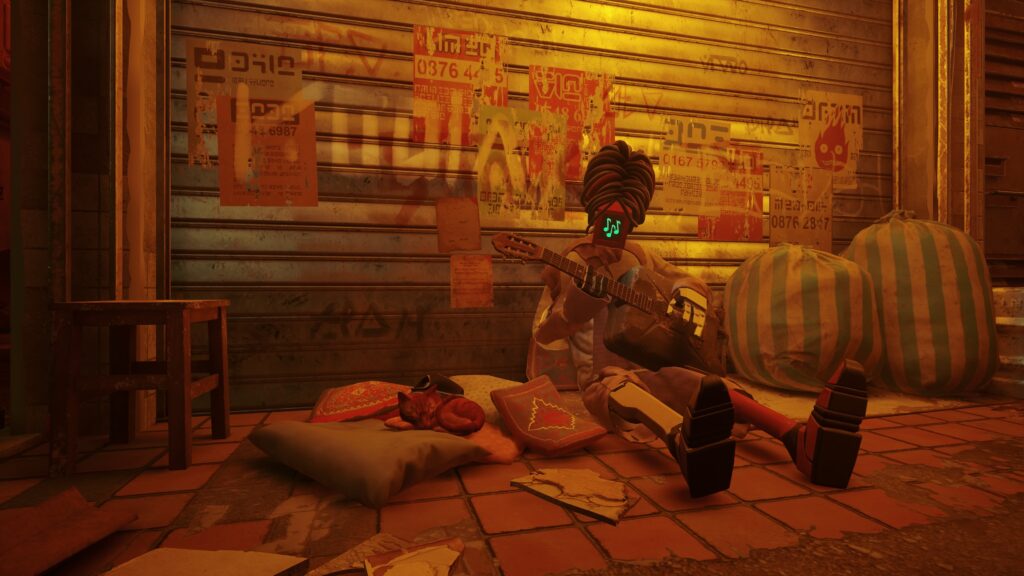
Stray (BlueTwelve Studio) is a cozy cat game set in a post-apocalyptic scifi world. A ginger tabby is separated from his family, after a pipe breaks casting him down into the dark depths of an underground city. After finding a tiny flying robot with spotty memories, kitty and bot attempt make their way up through the depths and back to the surface. Along the way, the kitty meets and befriend a number of companion bots, and the player gets a look at a world in which humanity is lost, but remembered through the manners and longings of the robots left behind.
I intended for Stray to be a break from playing SOMA — only to realize that Stray is also a horror game at certain points. The Zurks, tiny little offshoots of a virus that has grown wildly out of control, attempt to consume everything that crosses their path, both flesh and metal alike. As the player delves deeper into their nests, they grow increasingly terrifying in ways I wasn’t prepared for.
Despite the unexpected horrors, I loved the game. It does a wonderful job creating the experience of embodying the life of cat, while creating a haunting and wistful world. (My full review of it is up on Once Upon the Weird.)
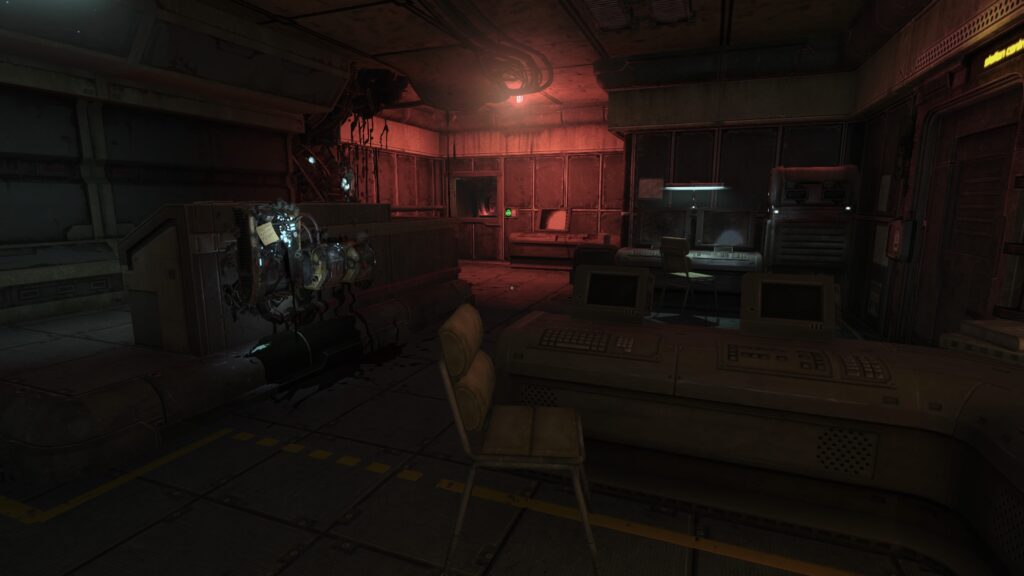
Soma (Frictional Games) is absolutely terrifying. I’ve played Layers of Fear, Resident Evil 2 Remake, and Resident Evil Village (particularly the Dollhouse level), but nothing has gotten to me quite as much as Soma. The level of “nope” is intense.
The set up is interesting — a man with brain damage after an accident goes for an experimental medical scan, only to wake up in a derelict underwater station infested with rogue robots bent of killing anything that moves. Considering the set up and a number of “glitchy” moments, the game seems to be suggesting that this is all a simulation. But simulation or no, I’m so stressed trying to get through this game.
I’ve been taking a break for a couple of weeks, but plan to get back to it. I’me genuinely curious to see where all of this is going.
I’ve had some new ideas for a puzzle game I’d like to make, which would require me to learn some coding. As part of the planning process, I decided to pull up some games that a similar style fo simple puzzle that I’m going for with this project.
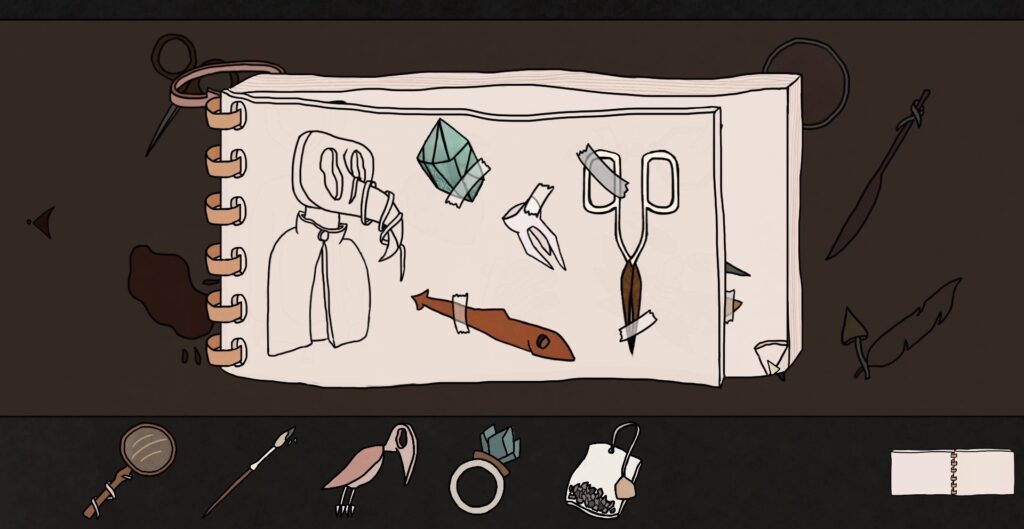
The first is Landlord of the Woods (Madison Karrh), in which the player character is frustrated by their life and escapes into the woods to take up the role of landlord for a bunch of odd creatures. Each one requires collecting a specific kind of rent, reflecting their personality. To collect the rent, the player has discover where it is by solving a variety of simple puzzles. I particularly like the way Karrh layers her puzzles, with the solutions being hidden inside other puzzles, which might be a way to approach things with my game.
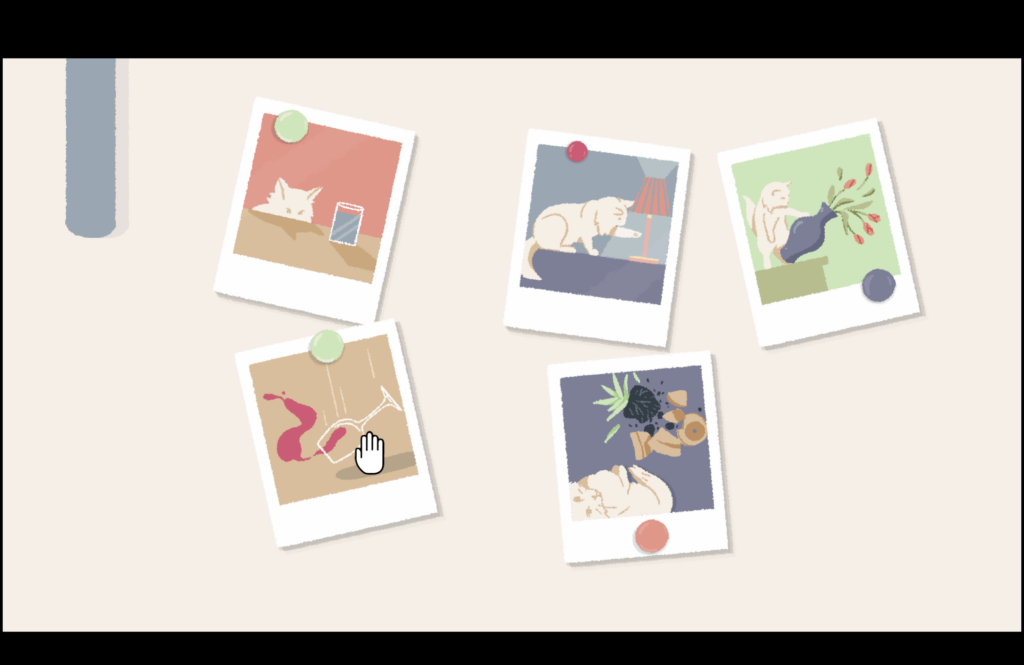
A Little to the Left (Max Inferno) is a charming puzzle game in which the player organizes various objects. In some cases, it’s a junk draw of screws, tape, and tools. In other cases, it might be books, pencils, or other objects. I’m interested in the way these puzzles are deceptively simple. In some cases, the solution is so obvious I overlook it entirely, and I’m wondering how I might use simple design like this to reflect a specific narrative experience.
If you’d also like to know about the books and media that I enjoyed recently, you can check out my Culture Consumption for December.